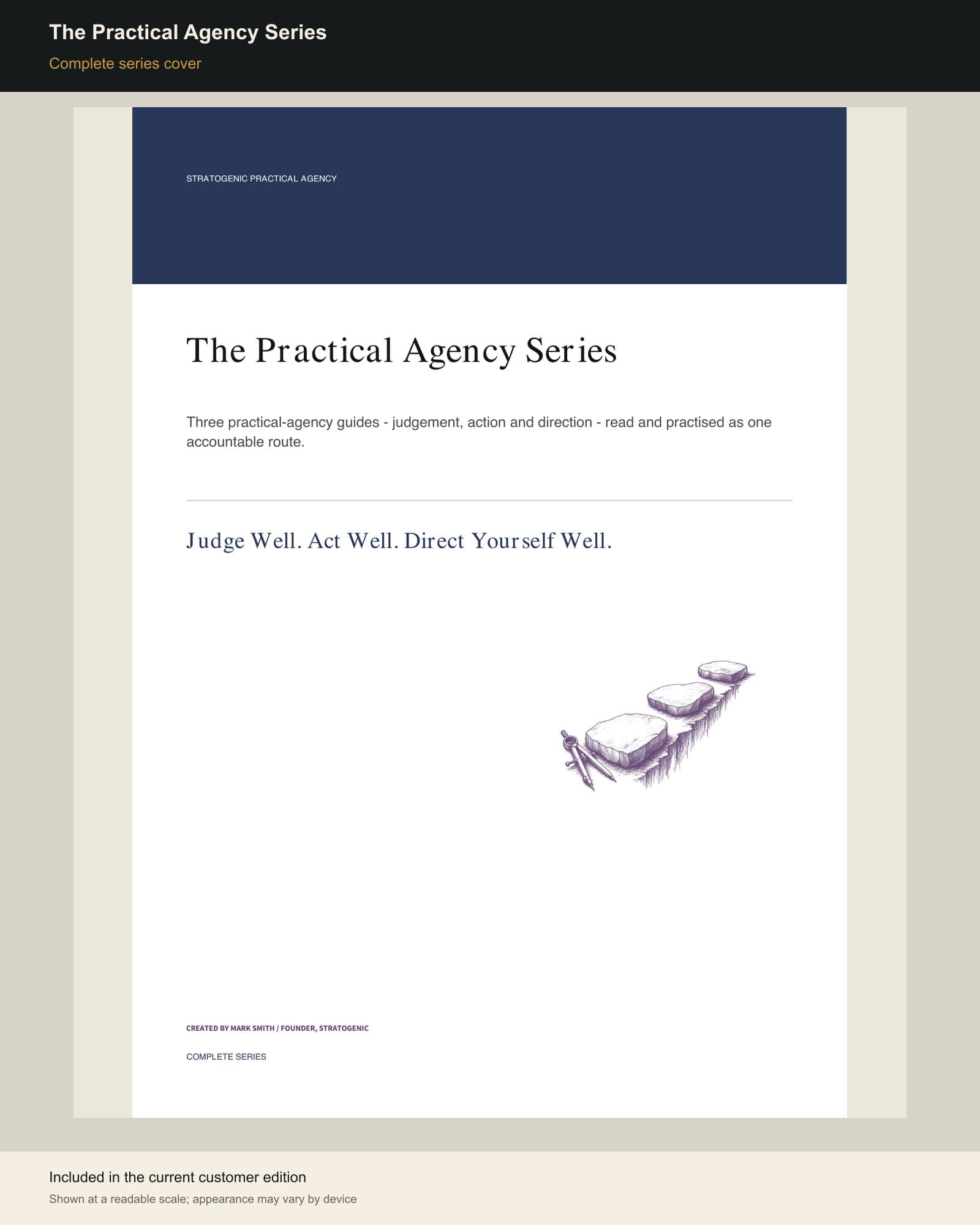
Take a Look Inside
Open a focused preview of the supplied pages, sheets or working views.
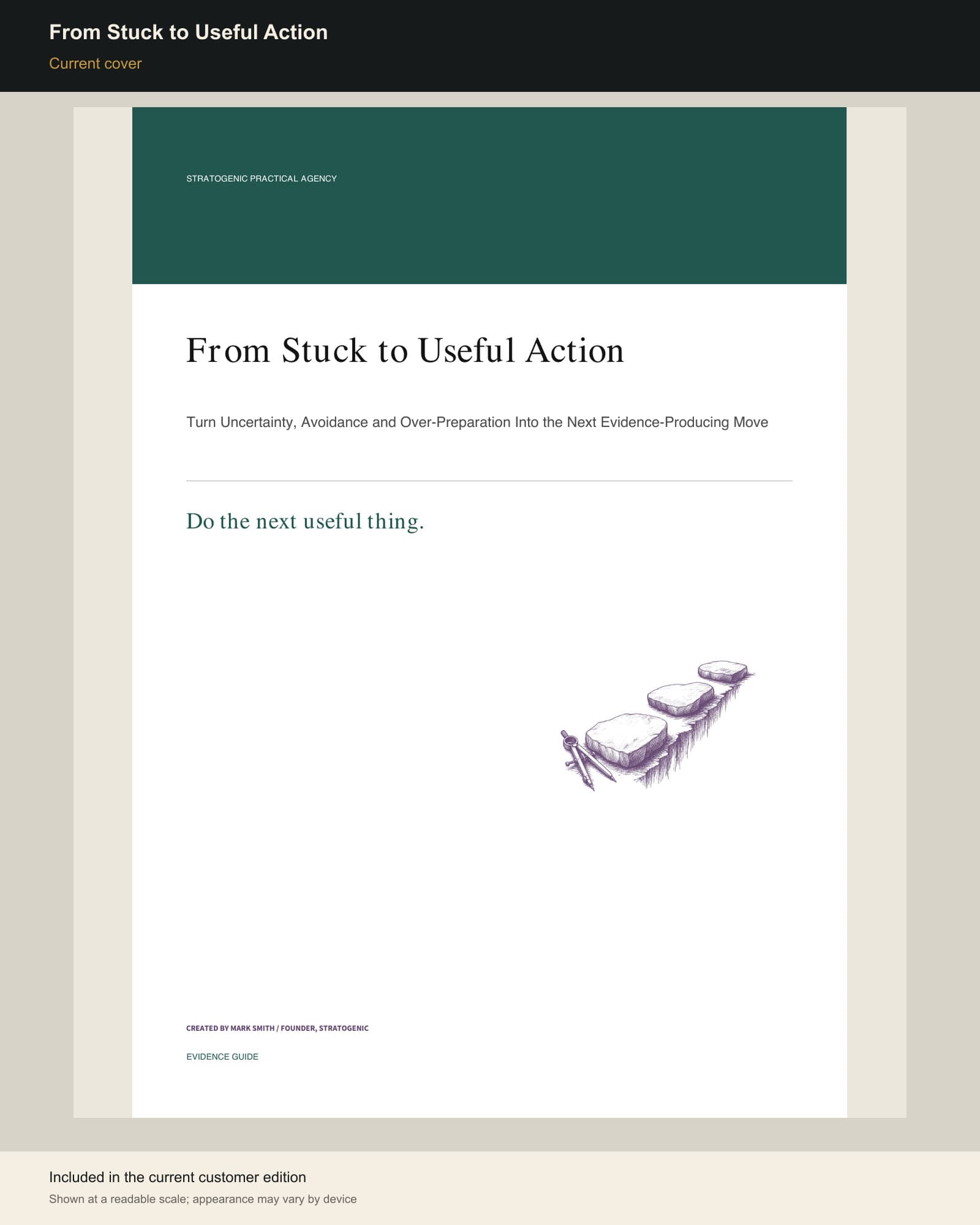
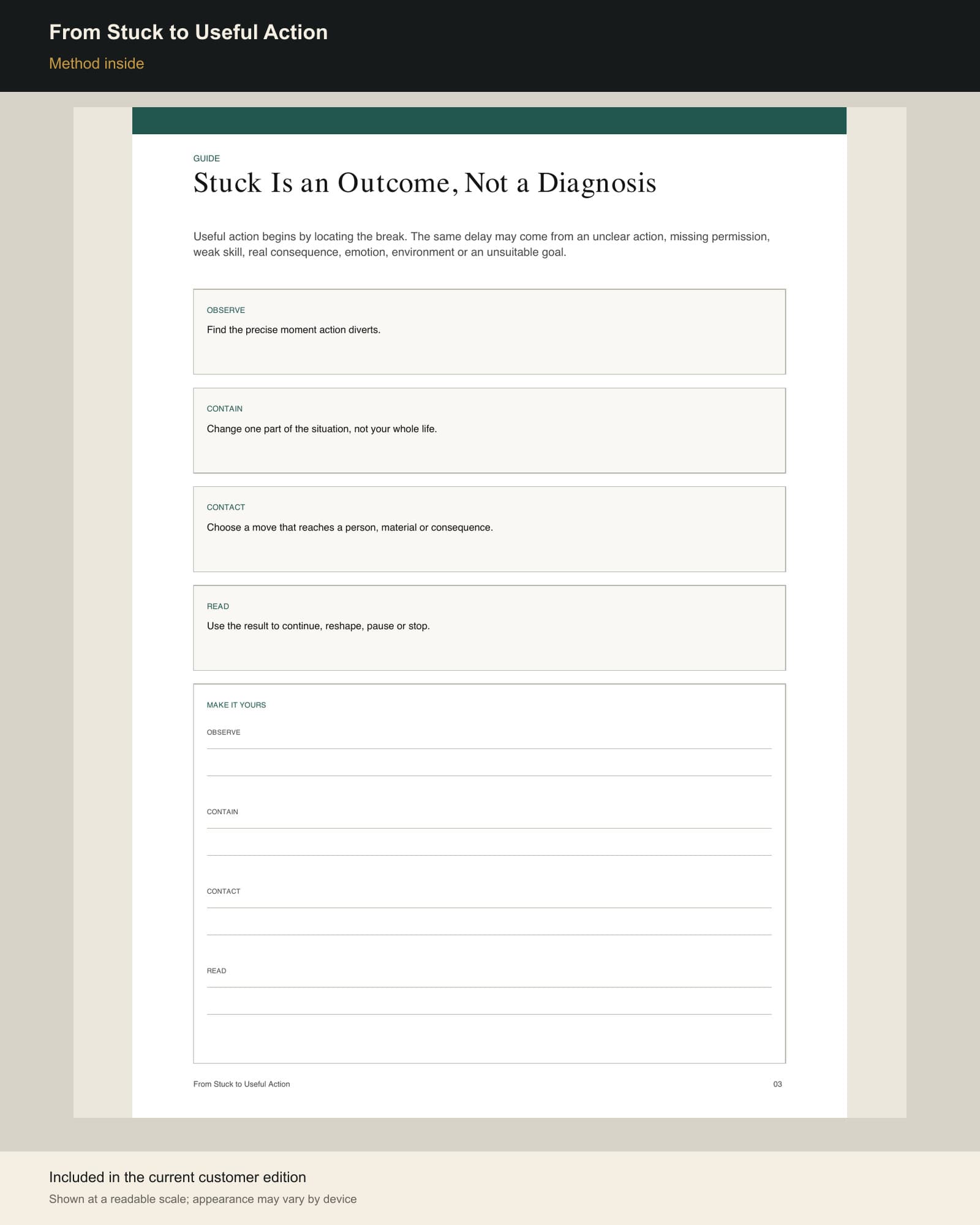
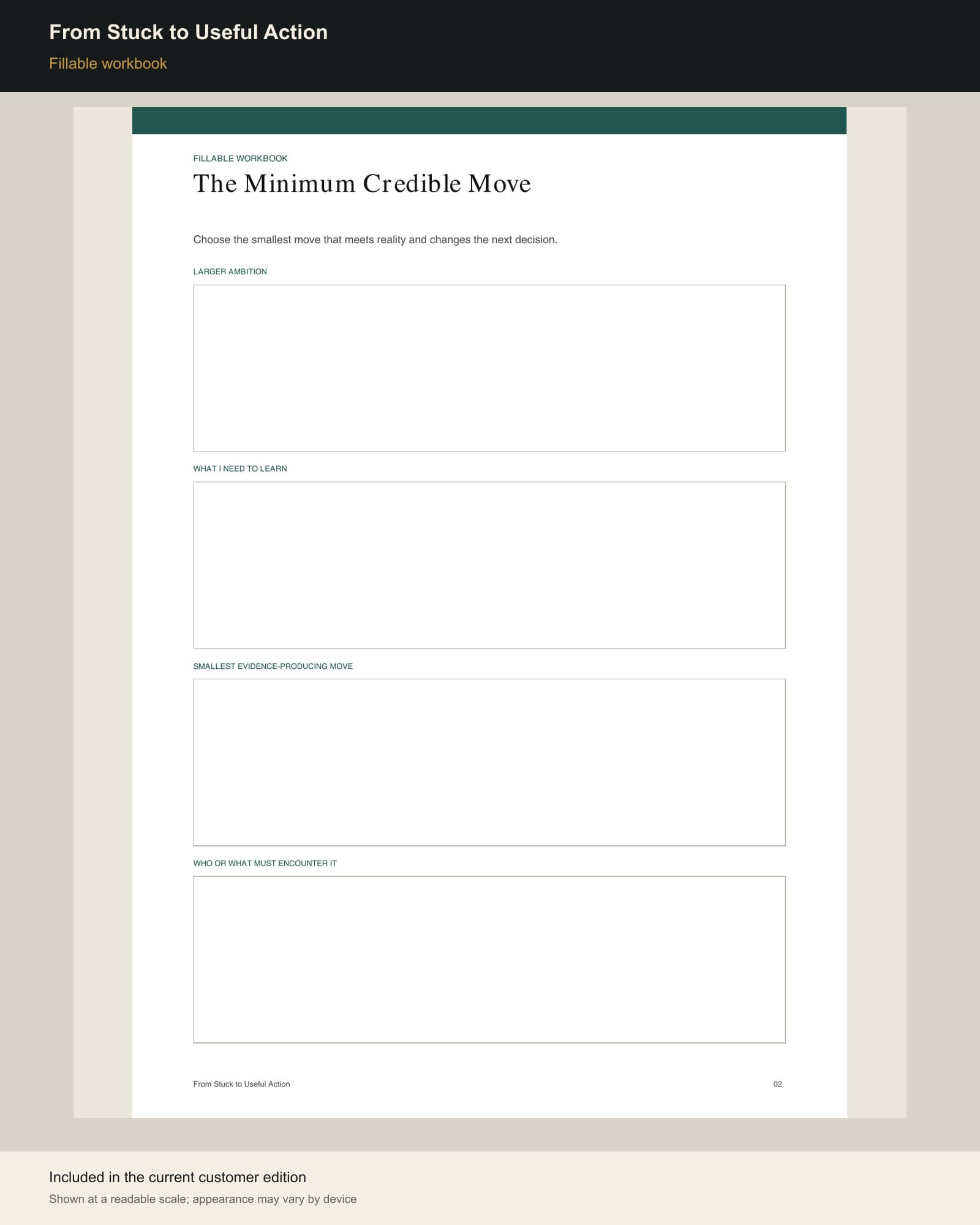
Research guide, physical and fillable workbooks, A5 action pad and A6 phone-side pad.
What It Is For
Turn uncertainty, avoidance or over-preparation into the smallest credible move that meets reality and changes the next decision.
Intended for: New founders, first-time operators, independent workers and people beginning unfamiliar work.
What Exists Behind This Page
This preview is tied to the built edition and its recorded release state. It is not a promise that the product is already available or that using it guarantees the outcome.
- 3 prepared editions
- 3 inspectable customer-page previews
- 9 named sources with stated use and transfer limits
Three Decisions It Helps You Make
- 01
What is unclear enough to block one useful next action?
- 02
Is the blockage caused by missing information, avoidable friction or a task that should not be done?
- 03
What boundary or counter-evidence means stopping is the useful action?
Price and Package
What this edition does not promise
- A working aid, not a guarantee of a commercial, career or personal outcome.
- It does not replace legal, regulatory, clinical, financial or employer-specific advice.
- Human release review and fulfilment testing remain required.
Source Corpus Acknowledged
Named research, standards and official guidance inform selected distinctions and design choices. They do not endorse or independently validate this Stratogenic product.
9 named sources and transfer limits
- Epictetus, Enchiridion, section 1. — Separate one's actions and judgements from outcomes and reputation. Limit: An ethical argument, not an experimental finding; 'up to us' is a responsibility boundary, not total control.
- Aristotle, Nicomachean Ethics, Books II, III and VI. — Treat practical excellence as trained activity and choice. Limit: Ancient virtue ethics informs questions but does not validate this workbook.
- Gollwitzer and Sheeran (2006), Implementation Intentions and Goal Achievement. — Pre-decide when, where and how a response begins. Limit: Effects vary; a plan cannot repair an unsafe, unwanted or structurally blocked goal.
- Wang et al. (2021), Mental Contrasting With Implementation Intentions. — Contrast the desired outcome with the real internal obstacle. Limit: Average effects are modest and heterogeneous.
- Steel (2007), The Nature of Procrastination. — Diagnose delay through expectancy, aversiveness, impulsiveness and delayed reward. Limit: Correlations do not establish one cause for an individual.
- Campos et al. (2017), Teaching Personal Initiative Beats Traditional Training. — Frame initiative as self-starting, future-oriented and persistent behaviour. Limit: An intensive Togo programme; its profit result cannot be transferred to this self-guided product.
- Brockhuis et al. (2025), A Meta-Analytic Review and Conceptual Model of Goal Adjustment in Response to Striving Difficulties. — Make reshape, pause, stop and re-engage legitimate routes. Limit: Evidence quality was low-to-moderate with high heterogeneity.
- Macri and Rogge (2024), Psychological Flexibility and Inflexibility as ACT Mechanisms. — Support values-consistent action without waiting for discomfort to disappear. Limit: This is a non-clinical transfer, not ACT or therapy.
- Stein et al. (2023), Individual Behavioral Activation: A Meta-analysis. — Recognise how avoidance narrows contact with information and reinforcement. Limit: No treatment claim; marked distress or impairment warrants qualified support.
Corpus review: 2026-07-19. Provider documentation is operational guidance, not independent validation or endorsement.
Frequently Asked Questions
What is From Stuck to Useful Action?
From Stuck to Useful Action is development pack designed to help new founders, first-time operators, independent workers and people beginning unfamiliar work. turn uncertainty, avoidance or over-preparation into the smallest credible move that meets reality and changes the next decision.
What do I receive with From Stuck to Useful Action?
Research guide, physical and fillable workbooks, A5 action pad and A6 phone-side pad.
Can I buy or download From Stuck to Useful Action now?
No. This is a forthcoming preview. Checkout and delivery stay disabled until named human approval and fulfilment checks are recorded.